
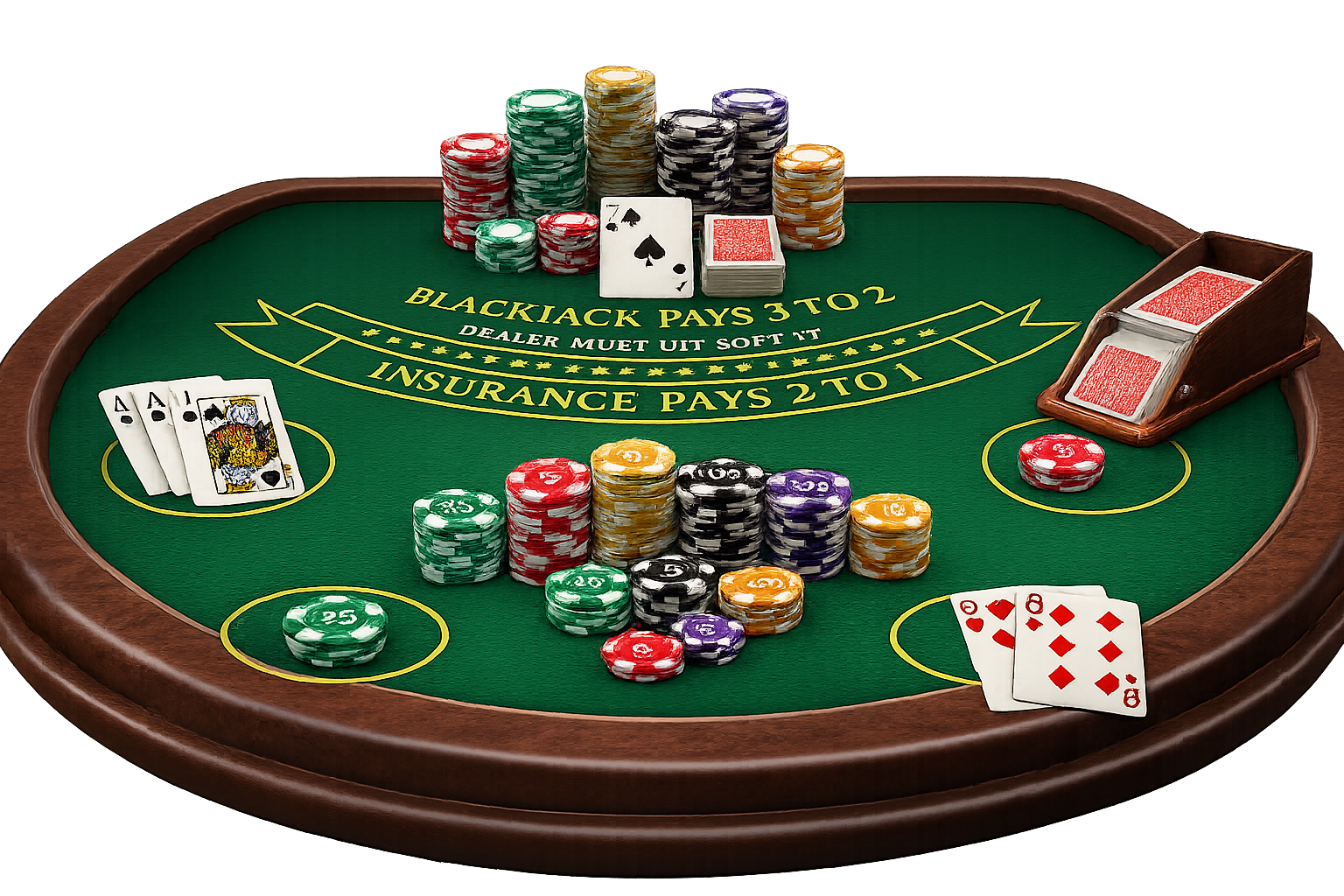
First Experience and Core Gameplay
When I began playing Blackjack at True Fortune Casino, it immediately stood out as a more strategic experience compared to slot machines or wheel-based games. Unlike automated gameplay found in slots, Blackjack requires active decision-making on every hand, which creates a stronger sense of control and involvement. Each move—whether to hit, stand, split, or double—directly influences the outcome, making the game feel more skill-based rather than purely luck-driven.
After completing the Sign up process, I accessed my account through the Login panel and navigated to the table games section within Games. The platform offers multiple Blackjack options, including both digital versions for faster gameplay and live dealer tables for a more immersive casino atmosphere. This flexibility allowed me to switch between formats depending on my preference, making it easy to adapt my experience while maintaining consistent performance across sessions.
First Impressions of the Interface
The layout is straightforward: a dealer at the top, player hands at the bottom, and clear controls for actions like hit, stand, double, and split.
Compared to other Games, Blackjack feels more analytical. Every decision directly impacts the outcome.

Basic Rules Overview
The objective is simple:
- Reach a hand value as close to 21 as possible
- Avoid exceeding 21 (bust)
- Beat the dealer’s hand
Cards are valued as follows:
- Number cards = face value
- Face cards = 10
- Ace = 1 or 11
| Action | Description | When to Use | Risk Level | My Observation |
|---|---|---|---|---|
| Hit | Take another card | Low hand value | Medium | Most frequent action |
| Stand | Keep current hand | Strong hand | Low | Safe decision |
| Double | Double bet, one card | Strong starting hand | High | High reward potential |
| Split | Divide pair into two hands | Paired cards | Medium | Situational |
| Access | Playable via **App** | Anytime | Low | Smooth mobile play |
My First Sessions — Observations
In early sessions, I approached Blackjack like a casual card game. However, I quickly realized that decision-making significantly affects outcomes.
Unlike Roulette, where bets are placed before the result, Blackjack requires continuous interaction.
Differences Between Digital and Live Blackjack
At True Fortune Casino, I tested both formats:
- Digital Blackjack → faster gameplay
- Live Blackjack → more immersive
The live version felt closer to a real casino experience, while the digital version allowed quicker sessions.
Platform Experience
The platform handled both formats well. Switching between Blackjack and Slots was seamless, and performance remained stable across desktop and the App.
I also checked the Bonus section to understand wagering contributions. Blackjack typically contributes less than slots, which is important for strategy.
Blackjack is not just about luck — it is a game of probability and decision-making.
Strategy Systems, Optimal Decisions, and Probability Control
Understanding Basic Strategy
Basic strategy is a mathematically optimized set of decisions based on:
- Your hand total
- The dealer’s visible card
Using this system does not guarantee wins, but it minimizes losses over time.
| Player Hand | Dealer Card | Recommended Action | Reason | My Insight |
|---|---|---|---|---|
| 12–16 | 2–6 | Stand | Dealer likely to bust | Defensive play |
| 12–16 | 7–Ace | Hit | Dealer advantage | Aggressive recovery |
| 10–11 | Any | Double | Strong position | High-value move |
| Pair of 8s | Any | Split | Avoid weak total | Strategic reset |
| Ace + 7 | 3–6 | Double | Soft hand advantage | Opportunity play |
My Experience Applying Strategy
At first, I relied mostly on intuition when making decisions, assuming that experience alone would be enough to guide my play. However, I quickly noticed that my results were inconsistent, with frequent swings and unpredictable outcomes. Once I began following basic strategy more carefully, my sessions became noticeably more stable. While losses still occurred, they were less severe, and overall performance felt more controlled and structured.
Probability Behavior in Blackjack
To better understand outcomes, I tracked how often certain events occurred.
This reflects the typical edge of the dealer — but also shows that the gap is relatively small compared to other games.
Card Counting — Practical Reality
I also explored the concept of card counting. While theoretically effective, in online environments:
- Decks are reshuffled frequently
- RNG systems prevent tracking
- Live games use multiple decks
From my experience, card counting is not practical in this environment.
Adjusting My Strategy Over Time
After multiple sessions, I refined my approach:
- Follow basic strategy consistently
- Avoid emotional decisions
- Focus on long-term outcomes
Interaction with Platform Tools
While playing, I occasionally referred to the FAQ section to confirm specific rules, table variations, and gameplay details, especially when switching between different Blackjack versions. This helped me avoid mistakes and maintain consistency in my decisions. I also used the Links section to ensure stable access to the platform, particularly during live dealer sessions, where uninterrupted connection is essential for a smooth and controlled experience.
Comparison with Other Casino Formats
Compared to Slots and Roulette:
- Blackjack offers the most control
- Outcomes are partially skill-based
- Volatility depends on decisions
Blackjack rewards discipline. Mistakes in decision-making directly increase the house edge.
Bankroll Management, Bet Sizing, and Session Control
After refining my strategy in Blackjack, I shifted my focus to bankroll management. This is where the game becomes significantly different from other casino formats. Because decisions influence outcomes, bankroll control directly affects long-term performance.
How Bankroll Behaves in Blackjack
From my sessions at True Fortune Casino, I observed that bankroll movement depends on two factors:
- Decision accuracy
- Bet sizing
Unlike Roulette, where outcomes are fixed probabilities, Blackjack allows small advantages through correct play. However, poor bankroll management can still eliminate this edge.
My Bankroll Strategy
To maintain stability, I implemented a structured approach based on percentage betting and session limits.
| Strategy Element | Implementation | Observed Result | Risk Level | Recommendation |
|---|---|---|---|---|
| Flat Betting | 1–2% per hand | Stable sessions | Low | Best baseline |
| Session Budget | Fixed bankroll portion | Controlled exposure | Low | Essential discipline |
| Stop-Loss | -25% session limit | Reduced losses | Low | Highly recommended |
| Profit Target | +30–50% exit | Secured gains | Low | Effective strategy |
| Bet Consistency | No aggressive scaling | Lower variance | Medium | Important control |
Typical Session Flow
Across multiple sessions, I identified a recurring pattern:
- Early phase: small fluctuations
- Mid phase: trend develops (up or down)
- Late phase: stabilization or exit
To illustrate this, I mapped a simplified session model.
This reflects a key insight: Blackjack sessions are smoother than most casino games, but still subject to variance.
Adjusting Bet Size
One of the most important lessons I learned was avoiding reactive betting.
Increasing bets after losses creates unnecessary risk.
Maintaining consistent stakes improves session longevity.
Because Blackjack involves decision-making, preserving bankroll is critical to allowing strategy to work over time.
Mobile vs Desktop Behavior
When playing via the App, I noticed that sessions became faster and slightly less controlled. The ease of access and quick interactions made it tempting to continue playing without carefully tracking results or reassessing decisions. On desktop, however, I maintained better discipline. The larger screen and slower pace allowed me to think more clearly, follow strategy, and make more calculated, consistent decisions throughout each session.
Interaction with Platform Features
During gameplay, I used platform tools to stay structured. Checking the Bonus section helped clarify wagering contributions for Blackjack.
Switching between Blackjack and other Games allowed me to reset mentally and avoid fatigue.
What Works Best
From my experience:
Flat betting provides the most stability
Consistent strategy improves outcomes
Setting limits protects bankroll
What Doesn’t Work
Aggressive bet progression increases risk
Chasing losses leads to poor decisions
Ignoring strategy increases house edge
Long-Term RTP, Edge Optimization, and Final Evaluation
After extended sessions with Blackjack at True Fortune Casino, I shifted my focus from individual hands to evaluating long-term performance. This is where the game reveals its true nature as one of the most analytically consistent casino options available. Instead of relying on short-term results, I began to observe patterns over time, which made outcomes easier to understand and manage.
How RTP Works in Blackjack
Unlike Slots or live wheel games, Blackjack’s RTP is not fixed in isolation — it depends on how accurately the player follows optimal strategy.
Typical RTP ranges:
- Basic strategy: ~99% RTP
- Poor strategy: ~95% or lower
This makes Blackjack one of the few games where player decisions directly influence long-term results.
| Play Style | House Edge | RTP | Volatility | My Interpretation |
|---|---|---|---|---|
| Optimal Strategy | ~1% | ~99% | Low | Best possible outcome |
| Average Play | ~2–3% | ~97–98% | Medium | Common scenario |
| Poor Decisions | ~5%+ | ~95% | High | Increased losses |
| Live Blackjack | Similar | Stable | Low | Consistent experience |
| Mobile Play | Same rules | Stable | Low | Accessible via **App** |
Visualizing Long-Term Performance
To better understand how results evolve over time, I tracked cumulative returns across multiple sessions.
To better understand how results evolve over time, I tracked cumulative returns across multiple sessions.Comparing Blackjack to Other Casino Formats
From my experience, Blackjack stands out in several ways:
- More controllable than Roulette
- Less volatile than Slots
- More skill-based than live wheel games
This makes it one of the most structured casino experiences.
Suitability for Australian Players
For Australian players, Blackjack offers a balanced and strategic experience. It is ideal for those who prefer:
- Skill-based gameplay
- Lower volatility
- Long-term consistency
Players looking for large, sudden payouts may find it less exciting, but those focused on control will benefit.
Platform Performance at True Fortune Casino
From a technical standpoint, the platform performed consistently. Access via Login, navigation across Games, and performance on both desktop and the App remained stable.
I also reviewed rules via the FAQ, which clarified gameplay variations and payout structures. The Links section ensured uninterrupted access when needed.
What I Learned After Full Evaluation
Blackjack is not about short-term wins — it is about minimizing losses and maximizing efficiency.
The key lessons from my experience:
Strategy reduces the house edge
Consistency improves long-term results
Discipline determines success
When Blackjack Works Best
I found that Blackjack performs best when:
I followed basic strategy consistently
I maintained flat betting
I set clear session limits
Limitations of the Game
Despite its strengths, there are limitations:
Requires concentration and decision-making
No bonus features or jackpot potential
Slow progression compared to slots
Final Evaluation
From a structural perspective, Blackjack stands out as one of the most efficient and controlled casino games I tested. It combines transparency with consistency, allowing players to clearly understand how outcomes are formed. Unlike many other games, it also offers real strategic depth, where decisions directly influence long-term results rather than relying purely on chance. This makes the experience more analytical and engaging over time.
At True Fortune Casino, the platform supports this gameplay effectively. Navigation between Games is seamless, and switching between different Blackjack formats does not interrupt the flow of play. Performance remains stable across both desktop and mobile environments, which is essential for maintaining focus and consistency during longer sessions.
Closing Perspective
Blackjack is not about chasing wins or relying on short-term luck — it is fundamentally about managing probability and making informed decisions on every hand. Each move, whether to hit, stand, double, or split, contributes to the overall outcome, which means the player plays an active role in shaping results. Over time, this creates a more structured and predictable experience compared to many other casino games.
For players who apply discipline and follow a consistent strategy, Blackjack offers one of the most balanced long-term experiences in online casinos. It rewards patience, focus, and the ability to remain consistent even during losing streaks. This makes it particularly appealing for those who prefer control over randomness.
However, for players who approach it casually or rely on intuition, the game may feel demanding and less forgiving. Mistakes in decision-making can quickly increase losses.
Ultimately, the outcome depends not on the game itself, but on how it is played.